
German Letter Writing for A1: Formal & Informal Letters with Templates and Phrases
Learn how to write formal and informal letters and emails in German — greetings, openings, closings, addresses, and ready-to-use templates for every A1 student.
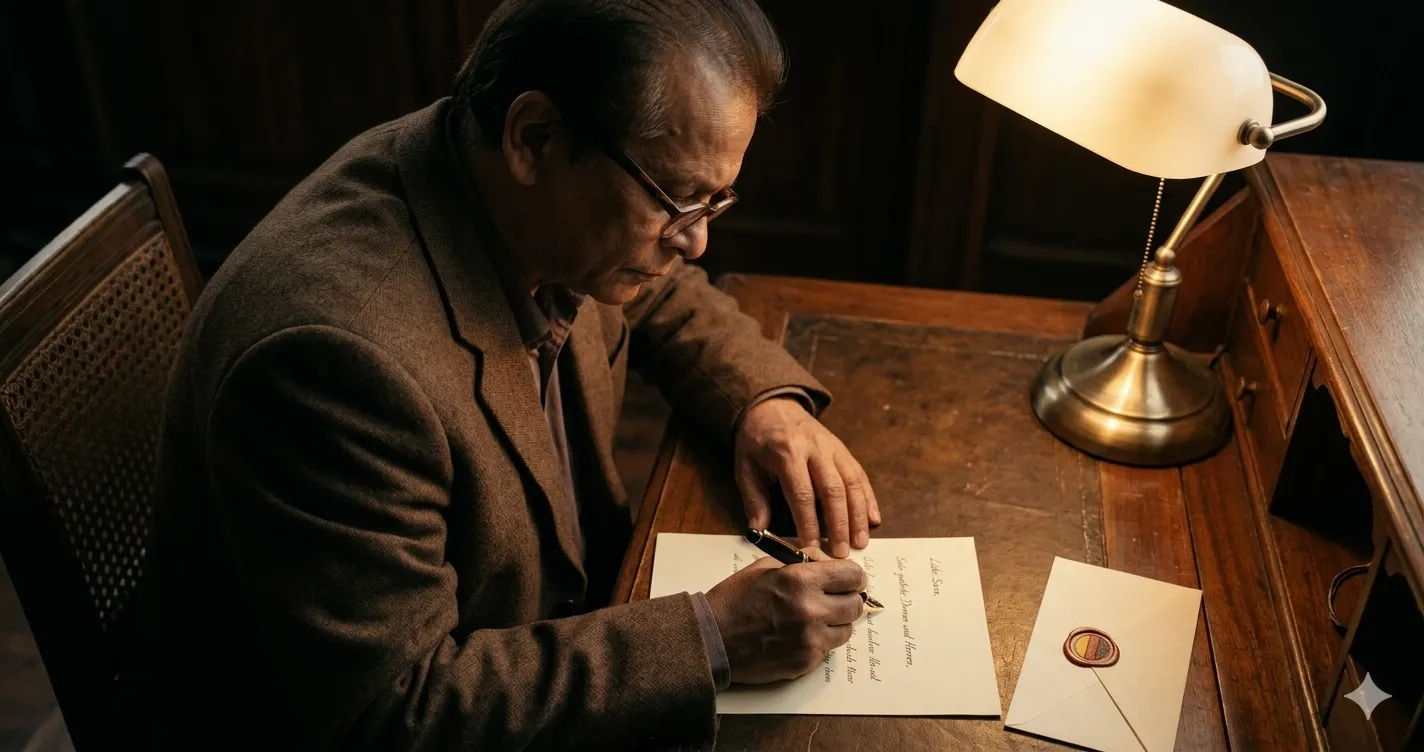
Letter writing is a core skill in every Goethe A1 exam and in real life — for emails to landlords, applications, friends, or family. The German letter has a clear structure that, once memorized, you can reuse forever.
This guide gives you everything: the difference between formal and informal letters, all the standard greetings and closings, ready-to-use phrases, and two complete templates you can adapt instantly.
The Two Types of Letters
- Informal (privater Brief) — for friends, family, classmates. Use du / ihr.
- Formal (formeller Brief) — for businesses, teachers, landlords, officials. Use Sie.
Rule: If you would call the person by their first name in real life, use the informal style. Otherwise, go formal.
Standard Structure of a German Letter
- Place and date — top right (e.g. Lahore, 12.05.2026)
- Greeting (Anrede) — followed by a comma
- Body — first sentence starts with a lowercase letter (because of the comma)
- Closing phrase — short polite line
- Sign-off (Grußformel) + your name
Greetings — Formal vs. Informal
Informal Greetings (du / ihr)
- Hallo Ali, / Hi Ali, — most common
- Lieber Ali, — Dear Ali (male)
- Liebe Sara, — Dear Sara (female)
- Liebe Familie Khan, — Dear Khan family
Formal Greetings (Sie)
- Sehr geehrte Damen und Herren, — Dear Sir or Madam (when you do not know the name)
- Sehr geehrter Herr Müller, — Dear Mr. Müller
- Sehr geehrte Frau Schmidt, — Dear Ms. Schmidt
Important: After the comma, the first word of the body starts with a lowercase letter (unless it is a noun or a name). Example: Hallo Ali, ich hoffe, es geht dir gut.
Useful Opening Phrases
Informal Openings
- Wie geht es dir? — How are you?
- Ich hoffe, es geht dir gut. — I hope you are well.
- Lange nichts von dir gehört! — Long time no hear!
- Vielen Dank für deine Nachricht / deinen Brief. — Many thanks for your message / letter.
Formal Openings
- Ich schreibe Ihnen, weil ... — I am writing to you because ...
- Vielen Dank für Ihre Nachricht / Ihre E-Mail. — Thank you for your message / e-mail.
- Mit Bezug auf Ihre Anzeige ... — With reference to your advertisement ...
- Hiermit möchte ich mich bewerben für ... — I would like to apply for ...
Useful Body Phrases
- Ich möchte ... — I would like ...
- Können Sie mir bitte ...? — Could you please ...?
- Ich brauche Informationen über ... — I need information about ...
- Leider muss ich absagen. — Unfortunately I must cancel.
- Vielen Dank im Voraus. — Thank you in advance.
- Ich freue mich auf Ihre Antwort. — I look forward to your reply.
Closings — Formal vs. Informal
Informal Sign-offs
- Liebe Grüße, — Best regards (most common)
- Viele Grüße, — Many greetings
- Bis bald, — See you soon
- Dein/Deine [name] — Yours [first name] (very personal)
Formal Sign-offs
- Mit freundlichen Grüßen, — Yours sincerely (the standard)
- Freundliche Grüße, — Kind regards (slightly less formal)
- Hochachtungsvoll, — Very respectfully (rare, very formal)
Then on the next line: your full name (for formal) or your first name (informal).
Template 1: Informal Letter to a Friend
Lahore, 12.05.2026

Hallo Sara,

wie geht es dir? Ich hoffe, du bist gesund. Ich schreibe dir, weil ich nächsten Monat nach Berlin fahre. Kannst du mit mir kommen? Wir können viele Sehenswürdigkeiten besuchen.

Bitte schreib mir bald zurück. Ich freue mich auf deine Antwort.

Liebe Grüße,
Ali
Template 2: Formal Letter / E-Mail
Lahore, 12.05.2026

Sehr geehrte Damen und Herren,

ich schreibe Ihnen, weil ich Informationen über Ihren Deutschkurs benötige. Ich möchte einen A1-Kurs besuchen und hätte gerne Auskunft über die Termine und die Kursgebühren.

Vielen Dank im Voraus für Ihre Antwort.

Mit freundlichen Grüßen,
Ali Raza
Common A1 Letter Topics (Goethe Exam)
- Cancelling or rescheduling a meeting
- Inviting a friend to an event
- Asking for course information
- Apologising for missing class
- Thanking someone for help
- Booking a hotel room
Common Mistakes to Avoid
Mistake 1: Mixing du and Sie
Pick one register and stick to it for the whole letter. Mixing them sounds wrong.
Mistake 2: Capital letter after the comma
❌ Hallo Ali, Ich hoffe ...
✅ Hallo Ali, ich hoffe ...
Mistake 3: Forgetting the date format
German uses day.month.year: 12.05.2026, not 05/12/2026.
Mistake 4: Wrong sign-off for the wrong situation
"Liebe Grüße" to a company is too friendly. "Mit freundlichen Grüßen" to your best friend is too cold.
Quick Phrase Bank to Memorize
- Vielen Dank — Many thanks
- Bitte — Please
- Es tut mir leid — I am sorry
- Können Sie mir helfen? — Can you help me?
- Ich verstehe nicht — I do not understand
- Bis bald — See you soon
- Schönen Tag — Have a nice day
Summary
- Informal letters use du/ihr; formal letters use Sie.
- Top right: place and date in day.month.year format.
- Greeting + comma → next line starts with lowercase.
- Standard closings: Liebe Grüße (informal) / Mit freundlichen Grüßen (formal).
- Memorize 5–6 ready phrases — they cover most A1 letters.
Goethe Exam Tip: Practice writing one short letter (40–60 words) every two days. Keep a personal phrase bank. The exam topic might be different, but the structure is always the same.
Want to practice real Goethe-style letters with feedback? GC Language Institute Lahore offers full Goethe exam preparation as part of every A1 course.
Ready to Start Learning German?
Join GC Language Institute — Lahore's most trusted German academy.
Enroll Now